Macros from TDEE · Free
TDEE Macro Calculator
A TDEE macro calculator starts with estimated daily calories (TDEE), then splits that target into protein, carbs, and fat. Enter your stats, pick hold / cut / surplus, choose a split, and get grams per day — without inventing macros that ignore your maintenance line.
- TDEE first
- calories before macros
- P / C / F
- grams from your target
- 3 splits
- balanced · high protein · lower carb
- 14 days
- verify calories, then fine-tune
Two numbers
What this page adjusts
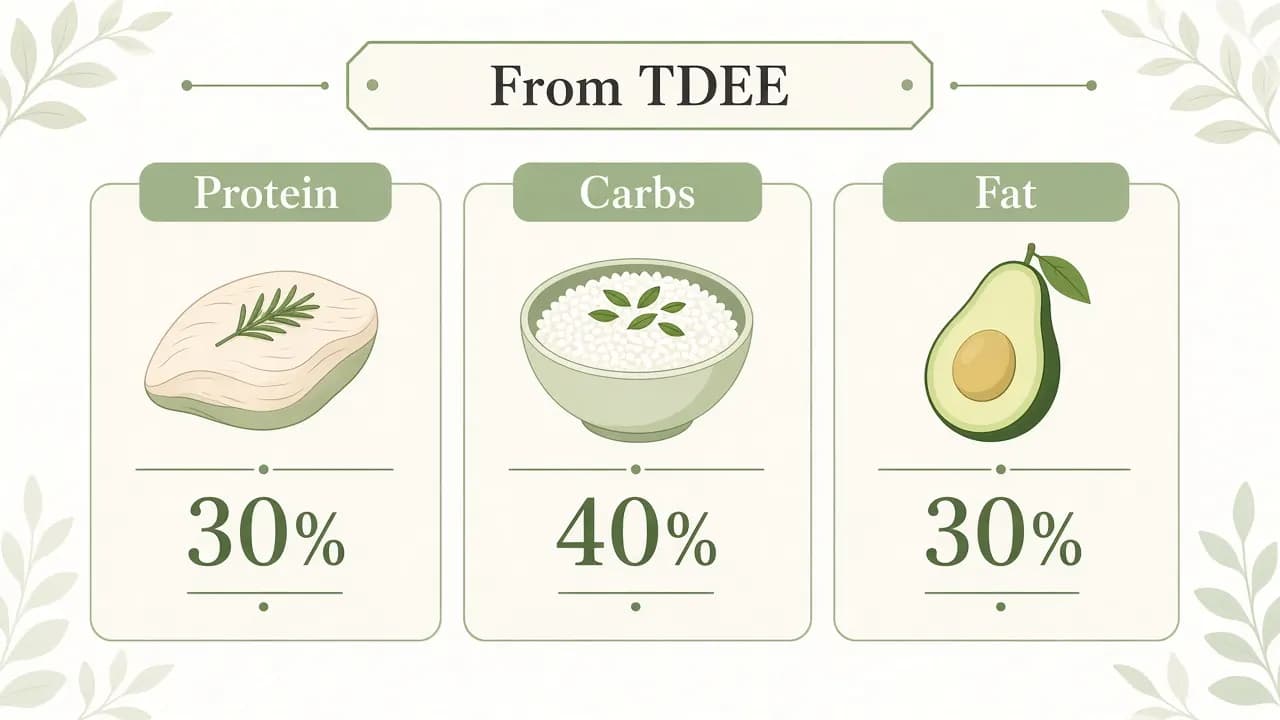
What it is. Standard TDEE runs first. The calorie control adds 0, −500, or +300 kcal. The split control then assigns percentages of that target to protein, carbs, and fat (÷4 or ÷9 for grams).
Why it’s here. Searchers for a TDEE macro calculator need macros tied to maintenance — not a standalone macro template that ignores activity and BMR.
How it differs. Formula TDEE stays visible. Target calories and gram macros move with the options you pick. Splits are planning defaults on this site, not lab prescriptions.
The context
What a TDEE macro calculator does
Macros are protein, carbohydrate, and fat — the grams that add up to your daily calorie target. A useful TDEE macro calculator does not invent a calorie number from thin air: it estimates TDEE first (BMR × activity), adjusts for hold / cut / surplus, then applies a percentage split to that target.
Protein is also checked against body weight (about 1.6–2.2 g/kg for many lifters). If the percentage split undershoots that range on a cut, raise protein and take the calories from carbs or fat. Confirm the calorie line with about 14 days of weekly weight averages before rewriting the split every day.
Why the formula drifts
What drives the macro numbers
Calories first. Split second.
01
TDEE target
Maintenance estimate from Mifflin (or Katch with body fat) × activity — then hold, −500, or +300.
02
Split choice
Balanced, high-protein, or lower-carb percentages of the calorie target.
03
Protein floor
Aim ~1.6–2.2 g per kg if you lift — protect muscle on a cut.
04
Carbs & fat flex
After protein is set, carbs and fat share the rest based on preference and training.
05
Honest activity
Wrong TDEE tier → wrong macros. Use the activity level chart if stuck.
06
Scale feedback
If weight does not move as planned, fix calories before chasing a new split.
Method
How this macro calculator works
Same TDEE engine as the homepage — with explicit macro math on this URL.
Run it with my numbers- 1
Estimate TDEE
BMR × activity. Enter body fat to use Katch-McArdle; otherwise Mifflin-St Jeor.
- 2
Set the calorie target
Maintain at TDEE, cut −500, or build +300. Formula TDEE stays visible.
- 3
Split into P / C / F
Protein and carbs ÷ 4 kcal/g; fat ÷ 9 kcal/g from the percentages you picked.
Pick a direction
Using your macro targets
Pick the calorie goal on purpose — then keep the split stable for a couple of weeks.
Highest return first
Make macros stick
The spreadsheet is easy. The week is the hard part.
- #1
Log protein first
Hit the gram target before fretting over perfect carb/fat ratios.
- #2
One change at a time
Do not cut 500 kcal and switch to low-carb in the same week.
- #3
Weigh calorie-dense foods
Oils, nut butters, and cheese quietly blow fat macros.
- #4
Recalculate after ~5% weight change
TDEE moves — macros should follow.
Worked example
Worked example: TDEE → macros
Sample adult. Not a prescription — your height, age, and activity change the grams.
| Sex | Female |
|---|---|
| Age | 35 |
| Height | 163 cm (5′4″) |
| Weight | 68 kg (150 lb) |
| Activity | Lightly active (×1.375) |
| Formula TDEE | 1,874 kcal/day |
| Page option | Maintain · Balanced 30/40/30 |
| Protein | ~141 g |
| Carbs | ~187 g |
| Fat | ~62 g |
Mifflin TDEE ≈ 1,874 kcal. Balanced split: protein 30% → 1,874×0.30÷4 ≈ 141 g; carbs 40% → ≈ 187 g; fat 30% → 1,874×0.30÷9 ≈ 62 g.
Protein floor at 1.6–2.2 g/kg is about 109–150 g for 68 kg — this split lands in range. A −500 cut would shrink carbs/fat first if you keep protein high.
Common mistakes
Common TDEE macro mistakes
Pretty spreadsheets fail when the calorie line is wrong.
01
Setting macros before TDEE
Macros allocate a budget. Guessing 2,000 kcal then splitting it skips maintenance.
02
Chasing perfect daily hits
Weekly calorie and protein averages matter more than exact carb grams every evening.
03
Low protein on a cut
Keep ~1.6–2.2 g/kg when lifting. Let carbs or fat absorb the deficit.
04
Changing the split every two days
You never learn what works. Lock calories and protein for about two weeks first.
FAQ
Questions about TDEE macros
Short, direct answers. If yours is missing, ask and we will add it.
Ask a questionA tool that estimates your daily calorie need (TDEE), then splits that target into protein, carbs, and fat in grams. TDEEHQ ties macros to the same Mifflin/Katch engine as the main calculator.
Keep going
Related calculators & guides
Weight-loss TDEE
Deficit before the split.
Maintenance TDEE
Hold-weight target.
Mifflin-St Jeor
Default BMR formula.
Katch-McArdle
Lean-mass BMR.
Muscle gain
Related TDEE calculator.
Two minutes